
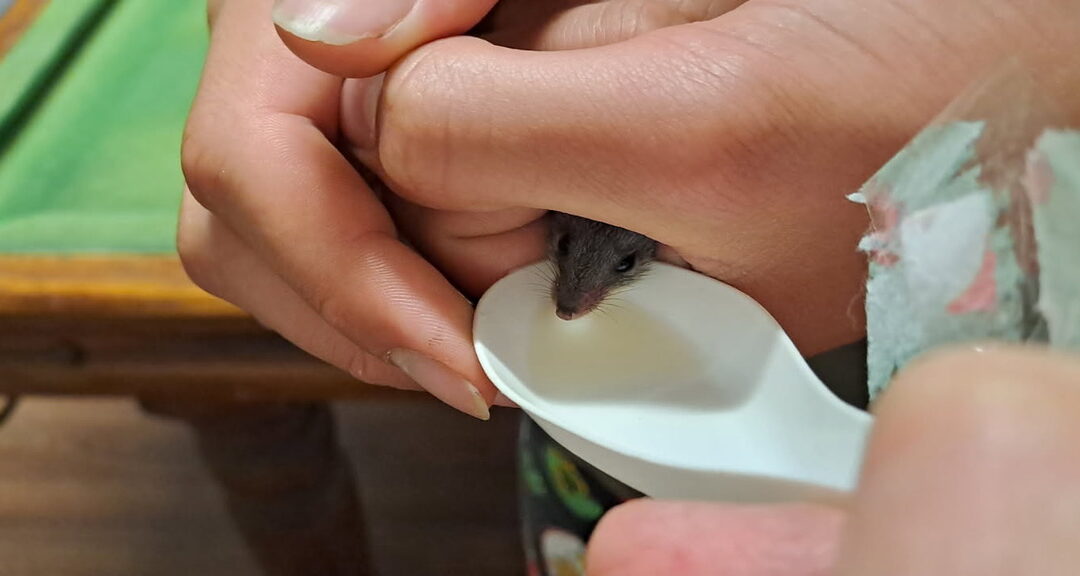
Wildlife Volunteers Association Inc (WILVOS) 24 hour hotline 07 5441 6200 recently responded to an unusual call from a local resident who discovered a family of antechinus living inside their home. Sadly, it was found that the mother had died, but her tiny babies were rescued and taken into care.
Antechinuses are small, carnivorous marsupials that resemble mice but are actually relatives of quolls and Tasmanian devils (all in the family of Dasyuridae). They play a vital role in our ecosystem by controlling insect populations. On the Sunshine Coast, species such as the Brown Antechinus and Yellow-footed Antechinus are commonly found in bushland and sometimes in homes seeking shelter.
This particular antechinus has been identified as the rare Buff-footed Antechinus. They were only described as a unique species in 2013. They’ve been recorded in SEQ and up at Eungulla near Mackay, but not in between! The distribution is patchy, and little is known about where they occur and how dense the populations are.
Our litter of six were from the hills west of Cooroy, the first public record in this area. They were released back there last week
The cause of the mother’s death was heartbreaking: she had eaten insects that had been poisoned by common household insecticides. This incident highlights an important issue – our everyday pest control choices can have devastating consequences for native wildlife.
By making small changes, we can help ensure that our native species, like the antechinus, thrive alongside us. Consider alternatives to chemical sprays and baits. Here are some tips: seal entry points to prevent insects and other animals from entering the home by fixing or filling gaps around windows, chimneys and doors, use natural deterrents such as essential oils like eucalyptus, tea tree or peppermint, which repel pests without harming wildlife. Then there’s integrated pest management focussing on cleanliness and reducing attractants such as food lying around, for example dog food or some meats, rather than relying on poisons, which have other unintended consequences for other wildlife as well.
Wildlife news from Jennifer Berry, Wildlife Volunteers Assoc. Inc (WILVOS) 54416200 www.wilvos.org.au